What It Measures
This test estimates the vertical balance between the brow-to-nose-base area and the nose-base-to-chin area. The upper hairline third is not used because hair can hide or distort it in photos.
Compare the vertical balance of your face with a simple AI landmark test. The result focuses on measurable brow-to-nose-base and nose-base-to-chin proportions so it stays useful even when the hairline is unclear.
Your marked result appears here
The overlay will show facial landmarks and measurement guides.
Analysis failed
Please try again with a clearer front-facing photo.
Facial thirds compares the middle third of the face with the lower third. In this implementation, the measurable focus is the glabella-to-subnasale region and the subnasale-to-chin region. It helps show whether the center and lower face feel proportionate to one another.
Based on 1564 analyzed faces in the reference sample.
This test estimates the vertical balance between the brow-to-nose-base area and the nose-base-to-chin area. The upper hairline third is not used because hair can hide or distort it in photos.
A value near 1 means the measurable middle and lower thirds are similar in height. The green band shows the common optimal interval in the reference sample.
Use a straight-on, level photo with a relaxed expression. Keep the chin, nose base, and brow region visible, and avoid strong camera tilt.
See how this measurement compares with the reference sample used for facial analysis.
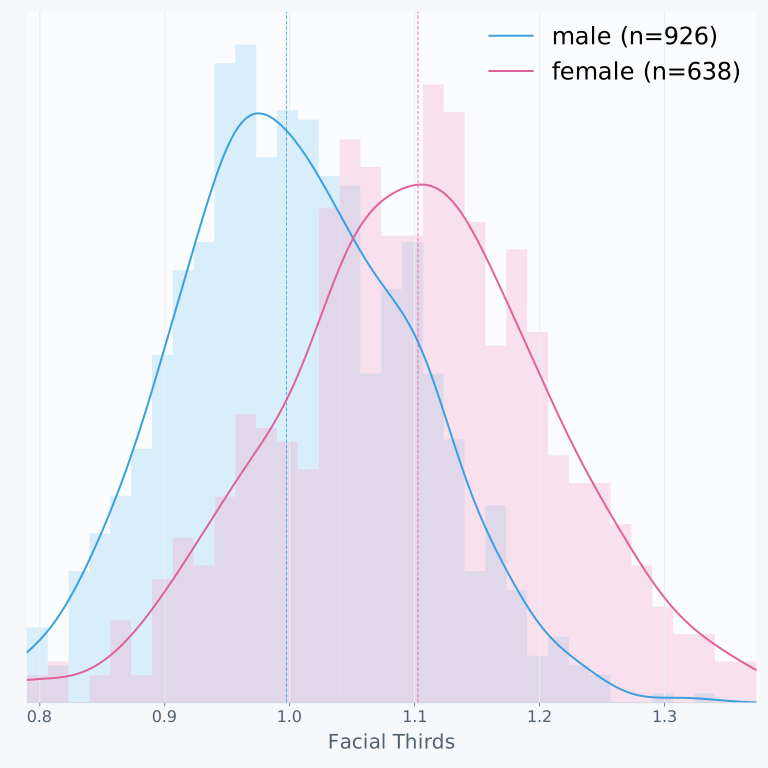
Facial thirds are a proportion guide used to understand vertical facial balance. In an ideal straight-on reference, the upper, middle, and lower parts of the face are often discussed as roughly even. In real photos, the hairline can be hidden by hair, lighting, or camera angle, so this calculator focuses on the more stable middle and lower thirds that face landmarks can measure consistently.
The test estimates three vertical landmark points: the brow/glabella area, the base of the nose, and the chin. It then calculates the middle third height as glabella to subnasale and the lower third height as subnasale to chin. The main score is:
A value close to 1.00 means the measurable middle and lower thirds are similar in height. To show the size of the difference, you can also use this optional interpretation:
The calculator score uses the ratio above. The optional percentage is only a reader-friendly way to understand how far apart the two measured thirds are.
This is only one facial proportion, not a full attractiveness score. Perceived facial balance also depends on symmetry, feature spacing, expression, camera distortion, and lighting. For wider background, see this overview of facial symmetry.
Face the camera directly and keep the phone level to avoid stretching one third.
Good lighting helps the test locate the brow region, nose base, mouth, and chin.
A neutral expression gives a cleaner lower-third measurement than smiling or posing.
Get an instant AI-powered rating of your looks — it's quick, accurate, and free!
Get My Rating